Artist Spotlight : Jacqui Barrowcliffe Interview
Jan 07, 2026Light on the darkest days
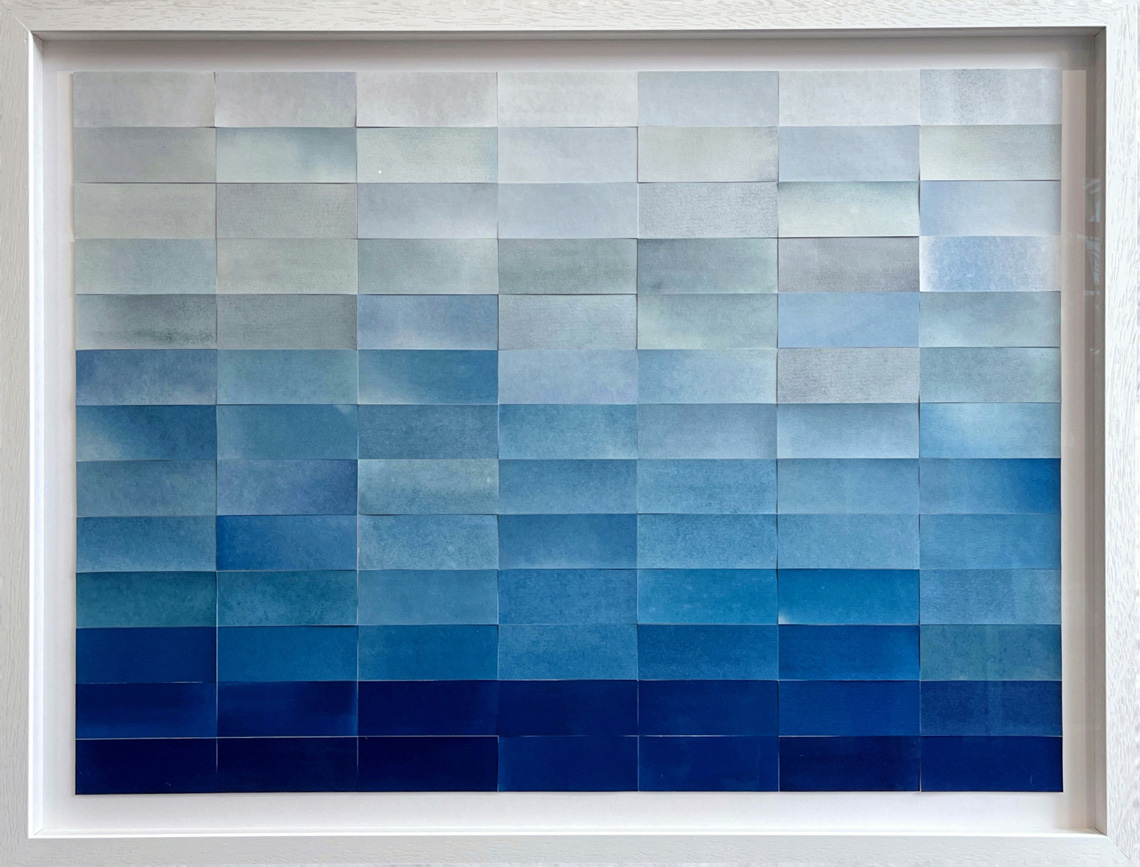
We are delighted to share this conversation with artist Jacqui Barrowcliffe, a past finalist for the Scott Creative Arts Foundation’s Emerging Artist Award. In this interview, Jacquie reflects on the development of her work Light on the darkest days, exploring themes of grief, time and the quiet rituals that shape her practice. Our thanks to Jacquie for her openness, and to SCAF curator Lydia Poole, whose thoughtful questions guided this discussion.
What drew you to cyanotype as a medium for expressing grief, and how did its sensitivity to light and time align with your emotional experience?
Before deciding on cyanotype, I experimented with long exposures, but the process felt too mechanical. It made me realise I wasn’t interested in making an image, but in working with the basic elements of photography: light and time. Cyanotype is slow and dependent on sunlight, which felt more in tune with a natural process. The paper was exposed to the elements just as I was while sitting on the bench, which made it feel more authentic. All these aspects connected to the slow, natural process of grieving and the search for light.
“Cyanotype is a slow process, and that slowness felt in tune with grief.”
Can you describe how the act of sitting on the same bench each day influenced your state of mind and the development of the work?
There is a line of benches along the cliff top, and each day I chose a different one. Some days were freezing and I couldn’t sit long; other days were pleasant and I stayed longer. Each time, I felt a sense of calm. As the days passed and the cyanotypes accumulated, I began to understand how the final piece would come together.
The shades of blue carry emotional weight. What does the colour blue mean to you personally, especially in the context of the exhibition?
Blue is emotionally charged, with deep historical and philosophical significance. Having lived by the Mediterranean and now the North Sea, it’s a colour I feel I hold within me. It carries warmth and hope, but also coldness and melancholy. Cyanotype contains a similar paradox: the darkest blues appear when exposed to the most light, and the faintest blues when hardly any light is perceived.
Blue surrounds us in the sky and sea, yet remains intangible. Its scarcity in nature gives the cyanotype’s chemical reaction a magical, almost spiritual quality. The process of creating the blue is essential — it wouldn’t be the same if I had simply painted it.
“The darkest, deepest blues are achieved when there is exposure to a lot of light.”
Was there a particular day or print that stands out to you?
Not really — each day formed part of the process. At the beginning I noted the time of day, exposure length and bench inscriptions, but I soon realised these details weren’t what the piece was about. The ritual itself gave the work meaning. It wasn’t a scientific or documentary record, but an emotional and spiritual one.
What role does ritual play in your creative process, especially when navigating something as complex as grief?
It can be difficult to continue certain rituals after the death of a loved one, so creating new ones can help. There is comfort in repetition when life feels beyond our control. This daily practice evolved from part of my grieving process into part of my creative practice. It gave me focus.
Can you tell us more about the exhibition title Who Wants Flowers When They Are Dead?
The show was curated by Lizz Brady of Broken Grey Wires in response to her own struggle with grief after the death of her father. The title is a quote from J.D. Salinger’s The Catcher in the Rye.
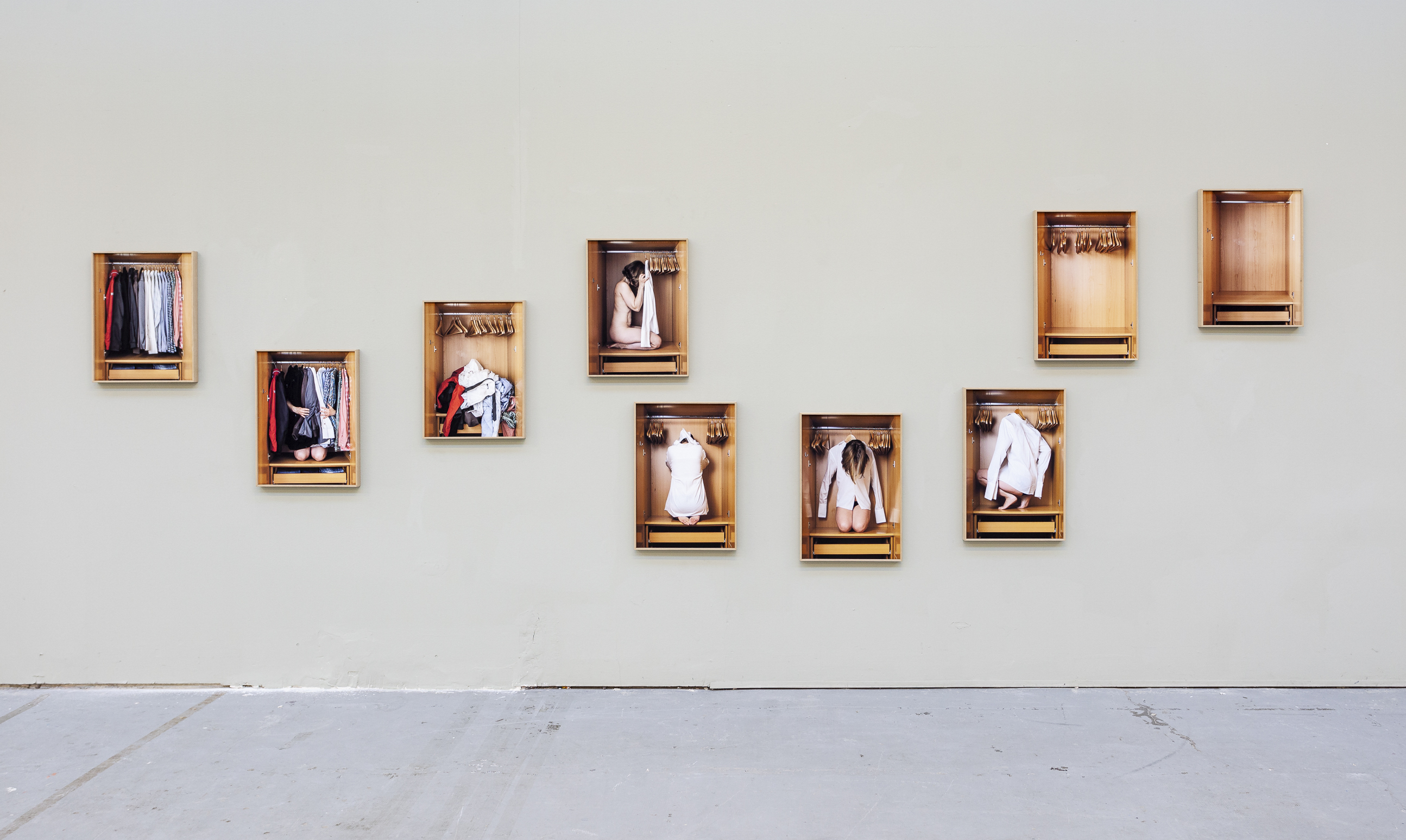
Transitional - Panoramic Festival 2020, Series of 9 digital photographs in wooden frames, 50x40cm, [2019/2020]
Your work transforms a private act of mourning into a shared visual experience. How do you navigate the vulnerability of making personal grief public?
I first took this step 5 years ago, with a piece called “Transitional” which was a personal project I had done for myself, as part of my grieving process. I decided to share it as a way of connecting with others who had gone through the same experience. Grieving can feel very lonely, but it is something we will all face at some point, it is universal. So often though, we shy away from talking about it, or are not given the time and space to do so, particularly in Western culture. Sharing my experience was difficult, putting my vulnerability out there for everyone to see, but the response I got to that project was amazing, it really touched and resonated with people.
For me, that is what art is for, creating an emotional connection with others, and I think that can only come through the artist being authentic and allowing themselves to show a certain vulnerability. I have had many moving conversations with people who have shared their own experiences with me in response to my work, and I feel so grateful for that.
Do you consider this piece finished, or is it part of an ongoing series?
The initial piece for SCAF is complete, tied to a specific period of daily practice. But it led to an ongoing practice that feels open‑ended. I created a larger version for the Broken Grey Wires show, and I’d love to see it grow to fill an entire wall or space.
Have you continued a practice of walking, observing and recording time?
Yes — walking and observing have long been central to my practice. I’ve always been distracted by details in my surroundings, whether on the beach or in the supermarket. Photography fascinates me because it both captures time and reminds us of its passing. Even without a camera, each cyanotype records the past.
I want the viewer to feel the essence of a photograph without being distracted by subject matter.
How has working with the natural environment shaped your broader artistic practice?
Since moving to the North Yorkshire coast, my practice has become increasingly influenced by the natural environment. Living so close to a rural landscape has made me more aware of changing weather, coastal erosion and climate change. These experiences feed into my work, which often explores change and impermanence, whether personal or environmental.
What impact do you hope the bench installation has on viewers?
The bench invites people to sit and spend time with the work. The piece is about pause and contemplation, and the bench echoes the action I used to create it. The cyanotypes are placed to echo the view I had from the benches, allowing for a deeper connection.
Has creating this work changed your relationship to grief or your understanding of time?
It has emphasised the importance of sitting with difficult emotions and allowing them to surface. We’re often rushed through grief, but taking time — even when uncomfortable — helps us heal.
Has your relationship changed with Light on the darkest days (2023)?
Yes. Although I made the piece in 2023, it had been forming for years and was deeply connected to my personal grief. The more recent version feels more connected to collective grief. The world is in a dark place, and finding hope is difficult. Continuing this practice feels necessary, but no longer stems from personal loss.
Do you have any upcoming projects or exhibitions?
I feel very grateful this year to have had some wonderful projects and opportunities to exhibit. I have recently exhibited another piece about grief which has also been a long time in the making, this time working with unpicked threads to create a floor based installation and accompanied with cyanotypes that show the process of unpicking. This piece, “Portrait after loss”, was part of an exhibition on grief and loss held in a sacred space used for alternative ecological funerals, so it was really quite a unique and fitting setting in which to show this piece of work.
I have also recently completed a commission for the University of Sheffield of an audiovisual piece, “Trace fossils”, as part of their British Academy funded project “Mining for Meaning: the Geoethics of Extractive Industries”. This has been a fascinating project to work on as it has allowed me to research about the mining heritage of North Yorkshire and consider the landscape and our relationship to it from the perspective of extraction and what lies beneath our feet. The piece will be available to view online soon.
In the pipeline I have some community projects I will be working on, as well as preparing work for different exhibitions next year, including the SCAF one at Richmond in February.
To see more of Jacqui's work check out her website :
https://jacquibarrowcliffe.com/
Or follow her on Instagram :
@littleboxoflightandstories
Stay connected with news and updates!
Join our mailing list to receive the latest news and updates from our team.
Don't worry, your information will not be shared.
We hate SPAM. We will never sell your information, for any reason.